Frequently asked questions
How is Jadau jewellery made?
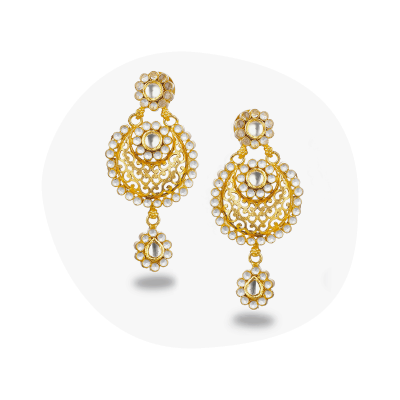
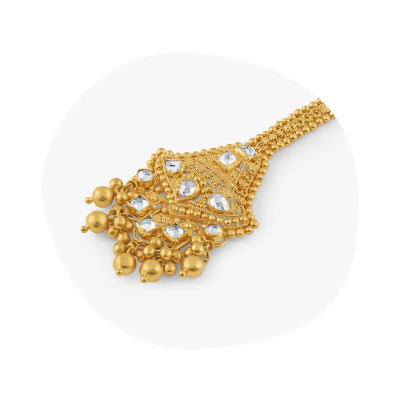
Jadau is a highly traditional Indian jewellery-making process that involves embedding Polki and Kundan stones by using foiled gold. To make these pieces even more intricate and beautiful, the technique is usually accompanied by detailed enamelling work, known as Meenakari, on the back of the jewellery piece. This meticulous craft showcase the incredible skills of the artisans, who patiently set every stone to create a dazzling, cohesive design. The combination of brilliant gemstones on the front and vibrant enamel work on the reverse makes Jadau creations exceptionally unique, representing a pinnacle of luxury and heritage in the world of Indian craftsmanship.
What does the process of Meenakari involve?
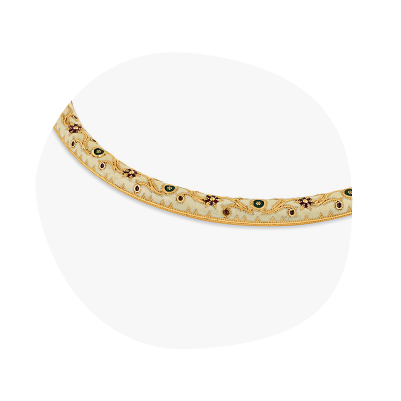
Meenakari is a historic Indian artistic technique that involves the process of heating powdered glass set inside engraved motifs to create stunning, colourful designs on metal. This delicate craft requires immense precision as the powdered glass must be carefully applied to the pre-carved metal patterns before being fired in a furnace. The heat fuses the glass, resulting in a smooth, glossy, and highly durable finish that looks like painted enamel. It is often used to decorate the reverse side of Jadau jewellery, ensuring that the piece looks just as magnificent from behind as it does from the front, adding a vibrant splash of artistic colour.
How are metal spheres used in the Granulation technique?
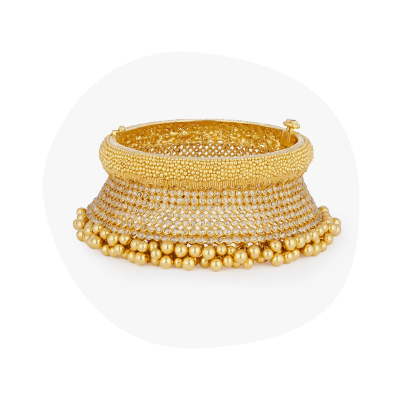
Granulation is a highly detailed metalworking technique used in Indian jewellery where small, decorative granules or tiny spheres of metal are carefully arranged on a metal surface. Typically, these miniature spheres are made of pure gold and are placed one by one onto a gold base to create complex, textured patterns. Once the granules are arranged in the desired pattern, they are heated just enough to fuse them to the surface without melting the entire piece. This ancient decorative process adds a unique three-dimensional texture, depth, and richness to the jewellery, highlighting the meticulous precision and patience of the master craftsman who assembled it.
What is the Ganthan process in jewellery making?
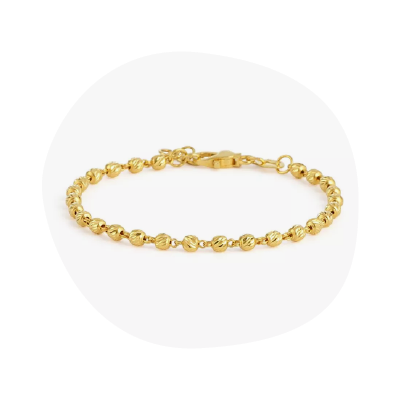
The Ganthan technique, which is also commonly referred to as knitting, is a traditional manual method of assembling delicate Indian jewellery pieces. This intricate process involves manually knitting beads together using fine, flexible gold wirework to create flexible, fabric-like jewellery structures. Artisans carefully weave and loop the gold wire through tiny beads, creating highly detailed, flowing patterns that drape beautifully when worn. Because this technique is done entirely by hand, it requires an exceptional level of dexterity, patience, and artistic vision. The resulting jewellery pieces are incredibly supple and comfortable, reflecting a brilliant fusion of textile-like weaving and high-end goldsmithing.
How does the Die-Stamping technique work?
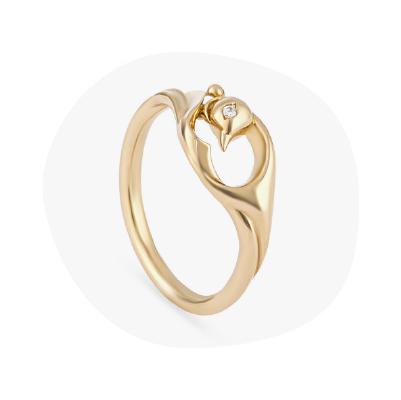
Die-Stamping is an industrial yet artistic Indian jewellery manufacturing technique that is used to shape gold with incredible precision. This process involves taking very fine, thin sheets of gold and carefully pressing them with a hammer into a specially designed metal mould, which is known as a die. By repeatedly striking the gold sheet into the detailed patterns of the die, the metal takes on the exact shape, texture, and contours of the mould. This allows jewellers to create lightweight, highly detailed, and consistent gold components that can be used to construct larger, more complex jewellery pieces. It is an excellent way to achieve intricate designs while maintaining a delicate structure.